
Incident Response - Response to Security Incidents
IT security incidents can never be completely ruled out. Therefore, it is important to create an incident response plan that describes how responsible individuals must respond to potential cybercrime incidents.
Definition and Explanation
A Responsive IT Incident Management
A timely response to the incident is necessary to contain the damage, as the loss of sensitive data or reputational damage can be existential. The graphic shows our Security Incident Response process, which we will describe in the following.

References






Certificates


Incident Management Process
The Cycle of an Incident Investigation
Cloud Security and Pentests are important topics for companies and organizations. We offer you remote and on-site support in investigating security incidents to reduce their impact on your business. We can also provide advisory or operational assistance in closing the security gap.
Main Goals
What Are the Goals of Incident Response?
The main goals of an Incident Response Plan are:
- Minimizing the impact of a security incident as much as possible.
- To restore the affected systems and data as quickly as possible.
- Identifying and eliminating the cause of the incident.
- Securing business operations and minimizing image and financial damage.
- Ensuring compliance with legal and regulatory requirements.
- Learning from every incident to strengthen resilience against future attacks.
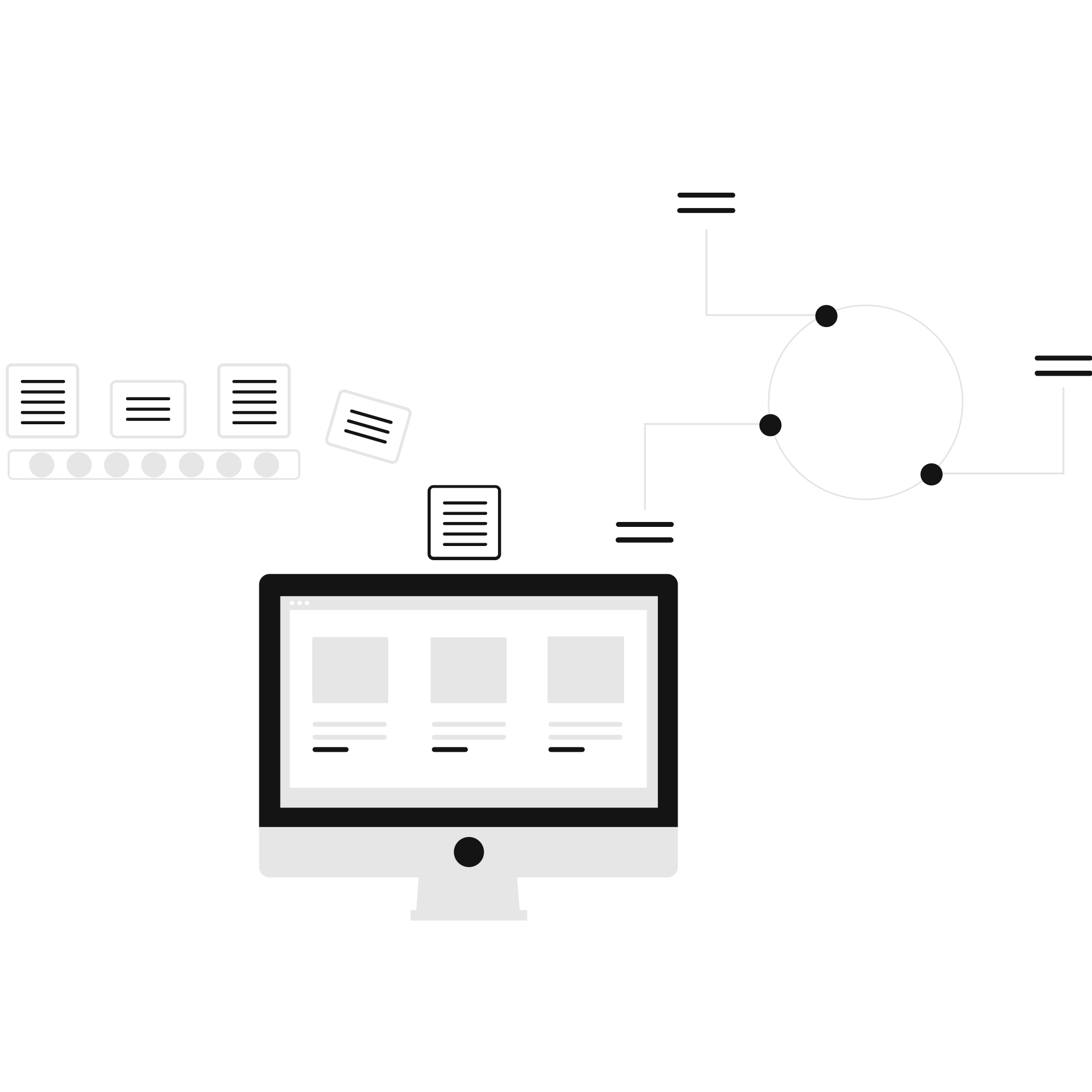
What Measures Do We Take for an Incident Response Plan?
1. Preparation and Risk Assessment
- Risk Analysis
A comprehensive risk analysis identifies critical assets, threats, and vulnerabilities.
- Priorities
Definition of clear goals and priorities for the Incident Response Plan, aligned with business objectives and compliance requirements.
- Team
Assemble an Incident Response Team that covers all relevant roles and responsibilities.
- Trainings
Employees need regular training on security incidents and response procedures.
2. Detection and Analysis
- Monitoring
Implement surveillance and detection systems to identify anomalies and potential security incidents early on.
- Review
Assess the impact and severity of the incident, document findings, and secure evidence for further analysis.
3. Containment, Elimination and Restoration
- Prevent Propagation
Isolate affected systems to prevent the spread of the incident.
- Cleanup
Remove malware, close security gaps, and eliminate the cause of the incident.
- Recovery
Restore systems and data from clean backups, install necessary patches, and reconfigure the systems to ensure security and integrity.
- Repeated Review
Monitor the restored systems to rule out any further compromises.
4. Post-Processing and Continuous Improvement
- Lessons Learned
Systematically analyze the incident and reflect on the measures taken.
- Documentation
Document findings and revise the Incident Response Plan and security measures accordingly.
- Planning Trainings
Develop additional training to strengthen security awareness.
- Awareness
Initiate campaigns to raise awareness of human errors.
Responsibilities
What are the roles and responsibilities of Incident Response Teams?
All team members work closely together, using clear communication channels and documenting all steps to ensure transparency and traceability. Regular exercises, debriefings, and continuous training strengthen teamwork and improve responsiveness to future incidents.
An Incident Response Team consists of professionals with clearly defined roles and responsibilities.
- Incident Response Manager
The Incident Response Manager coordinates all measures, makes decisions for damage limitation, and keeps the management informed.
- Security Analysts
Security analysts monitor systems, analyze threats, and document incidents.
- IT Forensic Analyst
IT forensic experts examine technical details, secure evidence, and propose countermeasures.
- IT Administration
The IT administration implements technical changes, isolates affected systems, and restores backups.
- Communications Manager
Communication managers inform internal and external stakeholders, manage crisis communication, and coordinate with PR teams.
- Legal Team
The legal team reviews legal issues, ensures compliance with regulations, and advises on liability issues.
- Executive Management
The management provides strategic guidelines, allocates resources, and serves as a link to other executives.
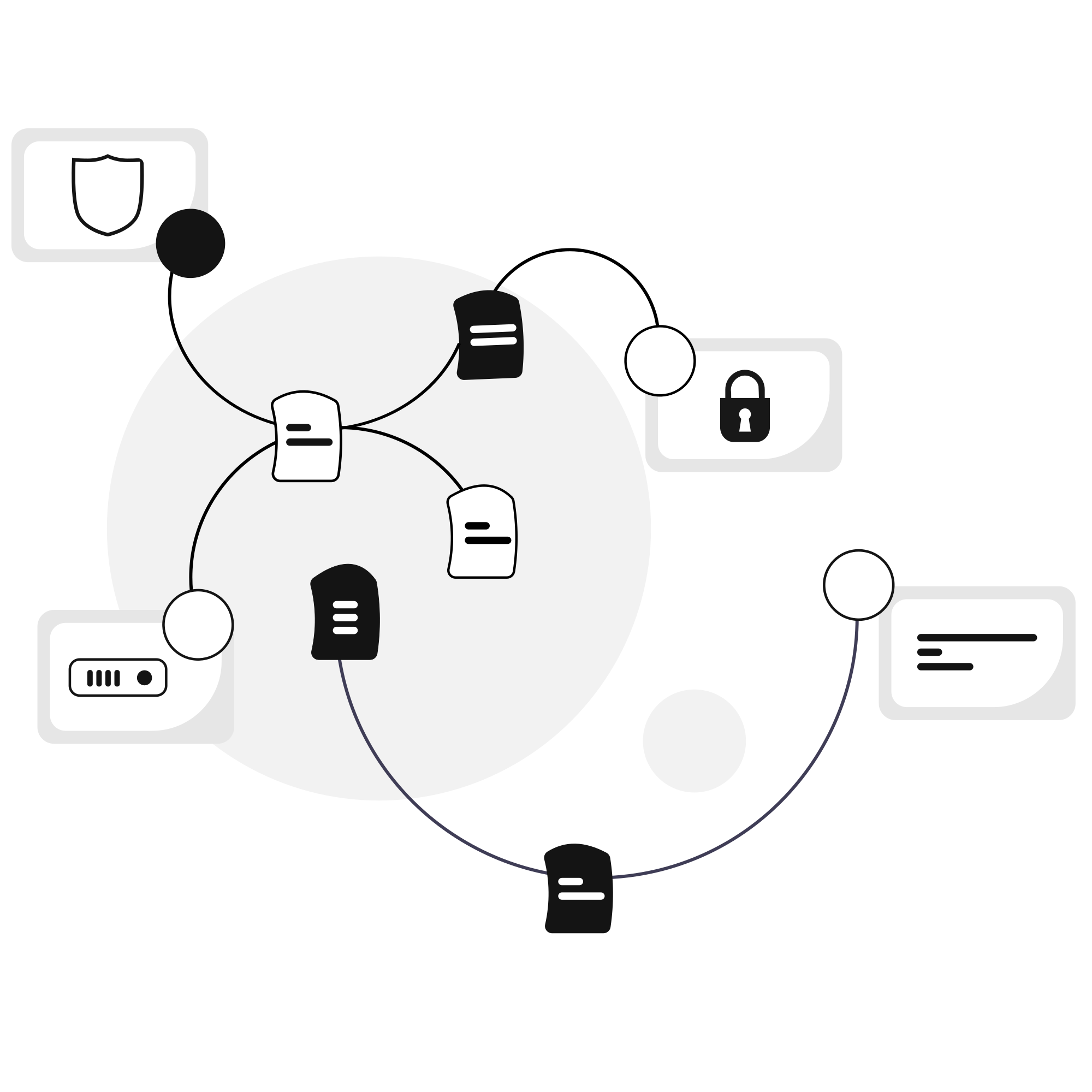
Risk Avoidance
How to Reduce Future Risks
A structured, regularly tested incident response plan is essential to continuously strengthen your company. Sustainable risk minimization includes:
- Review
Regular review and update of the Incident Response Plan based on new threats and lessons learned.
- Pentests
Conducting crisis simulations and pentests to test the team's readiness and uncover vulnerabilities.
- Training
Continuous training of employees on current attack methods and security measures.
- Implementation
Implementation of technical protective measures such as network segmentation, strong authentication, and continuous monitoring.
- Security Culture
Promoting a security culture where incidents are openly reported and used as an opportunity for improvement.

Range of Services for Cyber Security
Further Meaningful Services within the Scope of an IT Security Audit
- Penetration Test
Penetration tests are simulated attacks from external or internal sources to determine the security of web applications, apps, networks, and infrastructures and to uncover any vulnerabilities.
- Cloud Security
Due to the increasing complexity of cloud infrastructures, many services are incorrectly configured. We help you identify and eliminate misconfigurations and their effects.
- Phishing Simulation
A spear-phishing simulation is used to enhance the detection capabilities of your employees. We help you sensitize your employees, thus strengthening the last line of defense.
- Static Code Analysis
Static code analysis, also known as source code analysis, is typically carried out as part of a code review and takes place during the implementation phase of a Security Development Lifecycle (SDL).
Emergency Drill
Crisis Simulations: Preparing for the Worst-Case Scenario
Crisis simulations - also called Incident Response exercises - test and train a company's ability to respond to security incidents in a protected environment. Realistic scenarios such as ransomware attacks, data leaks, or compromises of the Active Directory are played out. The simulations can be conducted as a table-top exercise, walkthrough, or comprehensive live simulation and can be individually adapted to the company structure and threat situation.
The goal: Not only to check technical processes, but also the cooperation and communication between different departments. All relevant stakeholders - from IT to management to the PR department - are involved. Information is gradually revealed, as in a real crisis, to simulate stress and uncertainty realistically. External experts can be consulted to make the scenarios even more authentic and to objectively evaluate the reactions.
Forensics
Forensic Readiness: Securing and Utilizing Digital Evidence
Forensic Readiness means that a company is technically and organizationally prepared in such a way that digital evidence can be quickly, efficiently, and legally collected, secured, and analyzed in the event of a security incident. The goal: to minimize downtime and damage, comply with compliance requirements, and enable a later forensic investigation.
Important elements of Forensic Readiness are:
- Review
Analysis and evaluation of the existing IT infrastructure and the ability to secure evidence.
- Implementation
Implementation of processes and tools for automated collection, storage, and protection of relevant data (e.g., log files, network data, system images).
- Review
Regular review and adjustment of measures to new threats and technical developments.
- Training
Training employees in handling digital evidence and incident response processes.
- Guidelines
Creation of clear guidelines and responsibilities for evidence preservation and incident response.

Contact
Curious? Convinced? Interested?
Schedule a no-obligation initial consultation with one of our sales representatives. Use the following link to select an appointment: